
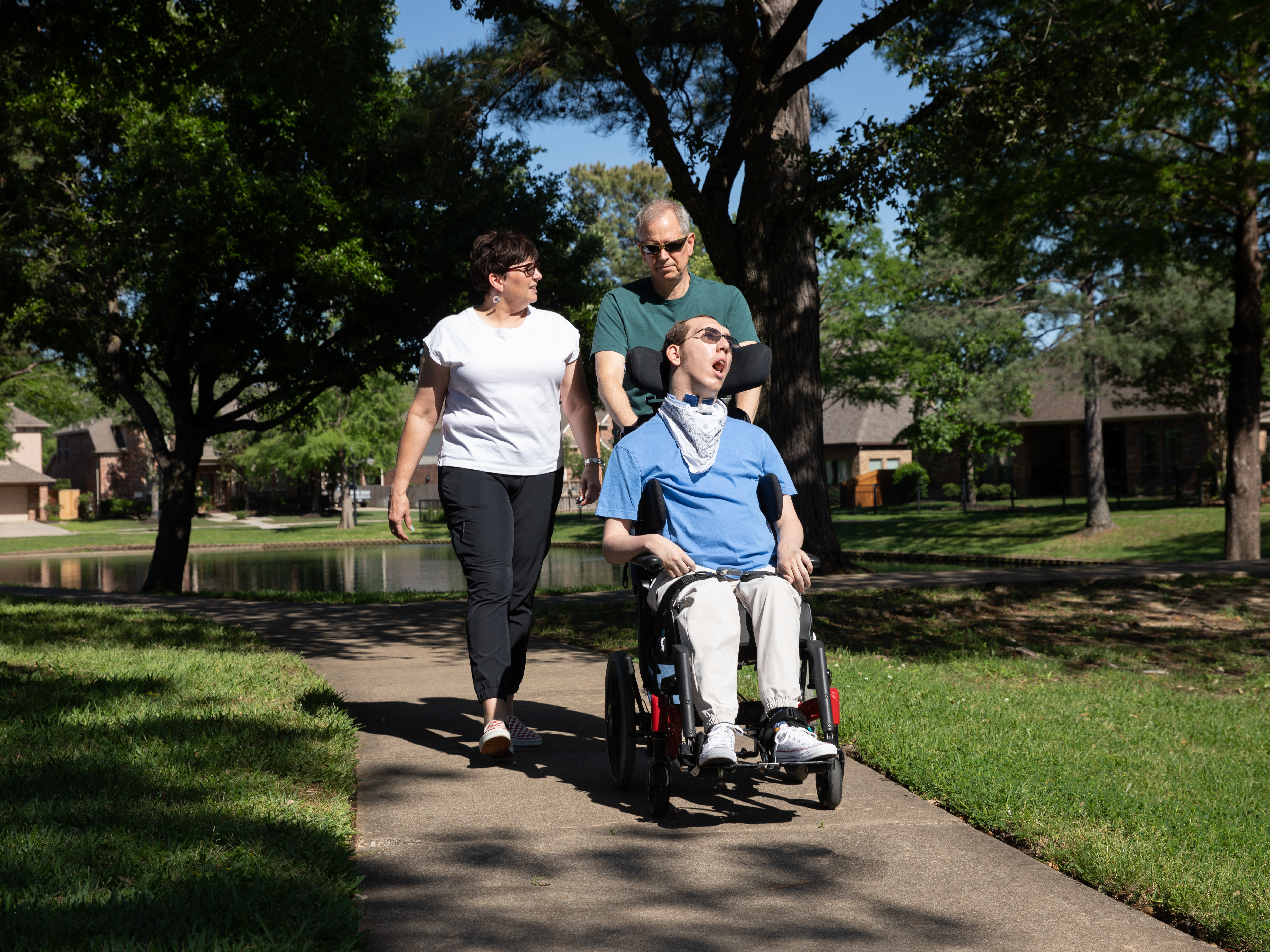
The Clinical Foundations Therapists Shouldn’t Skip!
In Part 2 of this blog series, I want to question and prompt you further to assist you in getting the foundations of wheelchair seating. Seating and positioning doesn’t have to be complicated if you continue to get the foundations right.
If you have landed here first, I would encourage you to read Part 1 where I reviewed how we connect the MAT Ax to our intervention, what posture is, and then the importance of getting the pelvis right, as the pelvis is the key to all seating and positioning. We will now work our way up and down the biomechanical chain to bring the foundations and key elements together.
Thoracic Support Drives Function
Once the pelvis is positioned, the trunk becomes the next essential structure to stabilise as we work our way up and down the biomechanical chain. A well‑supported thoracic spine allows users to:
- Maintain midline
- Optimise respiratory function
- Control their upper limbs
- Access joysticks, switches and touchscreens
- Sustain posture over longer durations
Without appropriate thoracic contour or support, users can collapse into compensation patterns that may increase tone, reduce function, and amplify fatigue.
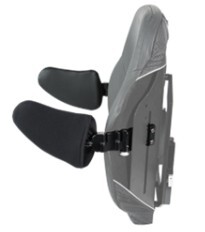
What should you consider in a back support when determining appropriate support?
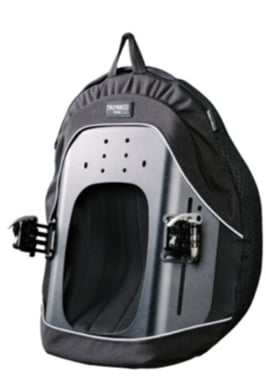
Clinical takeaway: Build support around the thoracic area that meets the user’s shape to either accommodate or reduce the posture based on MAT Goals - don’t try to force a new one. Stay focused on function and the individual needs for each person.
Asymmetry Is Normal. Support Should Be Too.
Many users may present with asymmetries. This could be due to structural changes, habitual, or tone‑driven. Trying to “straighten” these postures often leads to discomfort, rejection of equipment, or increased spasticity. Use your MAT Ax and mirror to help determine where and how much support and/or adjustment is required.
Instead, aim for:
- Comfortably aligned, not perfectly symmetrical
- Support that absorbs movement rather than fights it
- Adjustability that allows for future changes
Clinical takeaway: Let the seating system adapt to the user, not the other way around.

Comfort Comes from Stability, Not Softness
A system can feel supportive without feeling restrictive. True comfort emerges when a user is:
- Stable
- Secure
- Evenly loaded
- NOT working harder than necessary to stay upright
Comfort is a biomechanical state, not a cushioning property. It is also subjective. Ensure the person you are working with is engaged in the prescription process. They are an expert on themselves.
Clinical takeaway: If your client says, “I feel like I’m sliding,” treat it as a stability problem, not a cushion problem. Consider your primary and secondary points of control e.g. PSIS sacral block and hip belt.
Collaboration With the User is Essential
No matter how experienced we are, the user remains the expert of their own body. When they are actively involved, prescribing becomes easier and outcomes are more durable. Prescribing complex assistive technology is very much a team sport. We all have roles to play and expertise to share and contribute.
Ask:
- “Where do you feel unsupported?”
- “What position feels easiest for you?”
- “What makes the chair feel safe?”
- “Can you mobilise/reach/complete X task as you would like to?”
Their answers will tell you exactly where to focus your clinical reasoning.
Clinical takeaway: If the user can’t tell you what feels stable, they won’t be able to maintain the position you’re prescribing.
Final Thoughts
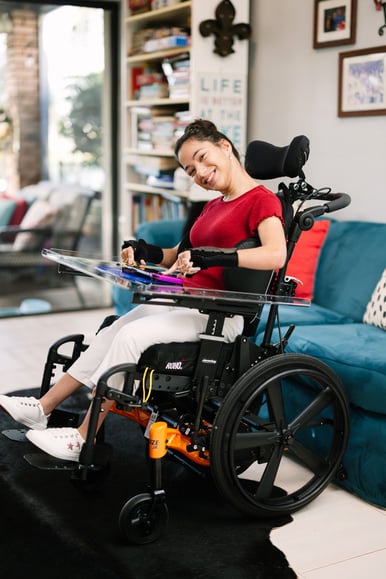
Effective seating prescription does not have to be complicated if you are seeking to support the body and maximise a person’s comfort and function. When you remain focused on the fundamentals of seating - stabilise the pelvis, contour the trunk appropriately, and respect each person’s unique movement patterns -you can create seating that feels natural, safe and sustainable for long‑term use.
If you want to find out more about prescribing contoured back supports, check out our new clinical resources here.

Tilly Brook, MOccThy (Hons) (OT)
Director Clinical Services
Tilly Brook graduated from the University of Adelaide in 2008 with a Bachelor of Health Science followed by a Masters of Occupational Therapy (Hons) in 2010 from the University of Sydney. Tilly worked within rehabilitation, working primarily with adults with a brain injury until 2015 when she moved to Singapore. In Singapore, she worked with children and adults at the Cerebral Palsy Alliance School (CPAS). In 2017 Tilly’s clinical knowledge continued as she worked with Mobility Solutions in Auckland, New Zealand. On her return to Australia, Tilly assisted in the development of the Clinical Hub Team at Sunrise Medical where her passion and experience for mentoring and educating therapists grew. Tilly Joined Permobil in January 2022 and is driven to grow therapists, enabling them to be the best therapist they can be.