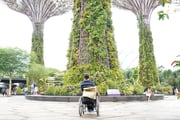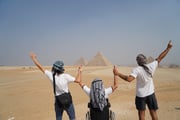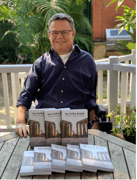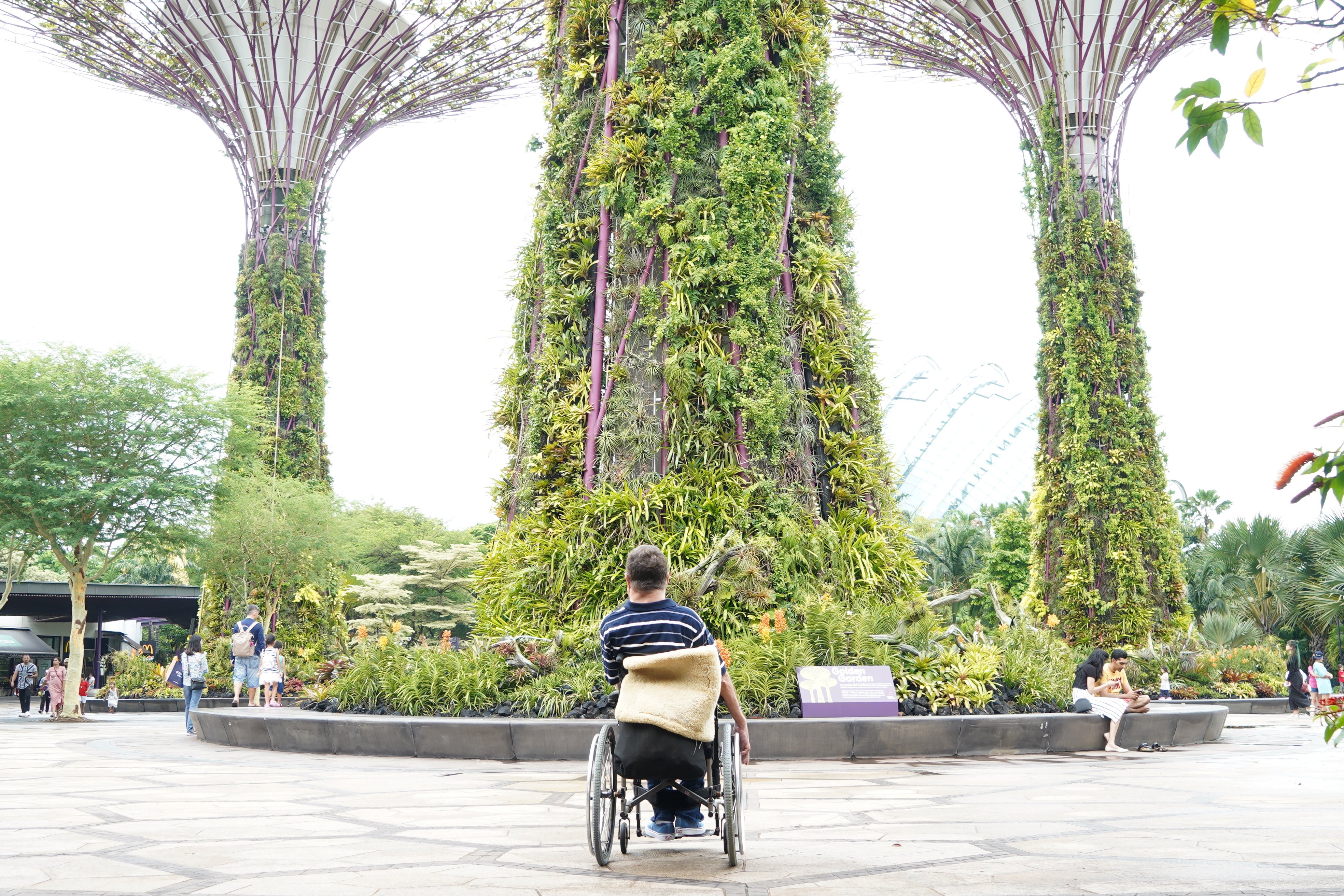


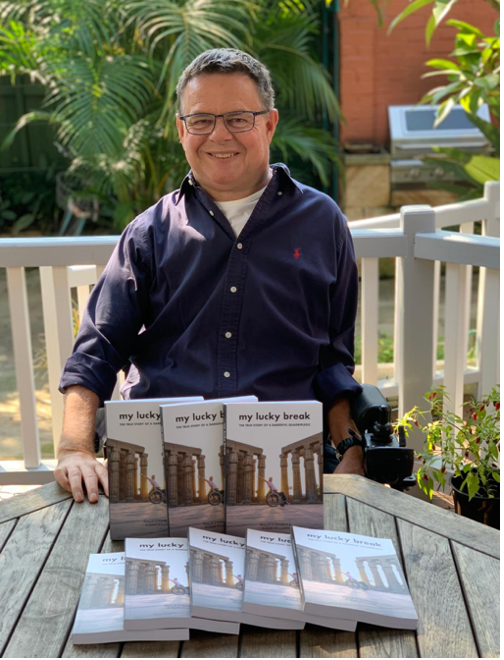
About the Author: Philip Stephens is a Sydney-based traveller, author, and manual wheelchair user who has explored more than 44 countries. After sustaining a spinal injury at 18 (C4-C5 injury), travel became one of the ways Phil learned how to move through the world on his own terms. His approach is grounded in planning, systems, and real-world experience, shaped by decades of international travel. In his blogs for beyond, Phil shares the practical routines and strategies that make complex journeys possible, from airports and equipment to funding and support on the road. He is also the author of My Lucky Break.
To read more of his stories or purchase the book, visit www.iamphilipstephens.com.
You can also follow him on Instagram - @philiponwheels.
My gear strategy: why I stick with Titanium and a tool kit
When I first headed off to Vanuatu in 1984, I had to make a significant decision about what I was going to sit in. At the time, power chairs weren't really designed for the great outdoors, so I took my manual chair. It is worth mentioning that in all my years of travelling to over 44 countries, I have never actually travelled with a power wheelchair. My entire travel strategy and all these experiences I share are based solely on using a manual chair.
I feel that sticking with the manual chair was one of the best decisions I ever made for my travel life. Even later on, when power chairs got more rugged, I realised that for me, the manual chair is just more flexible. It gets me into places a heavy power chair simply can’t go.
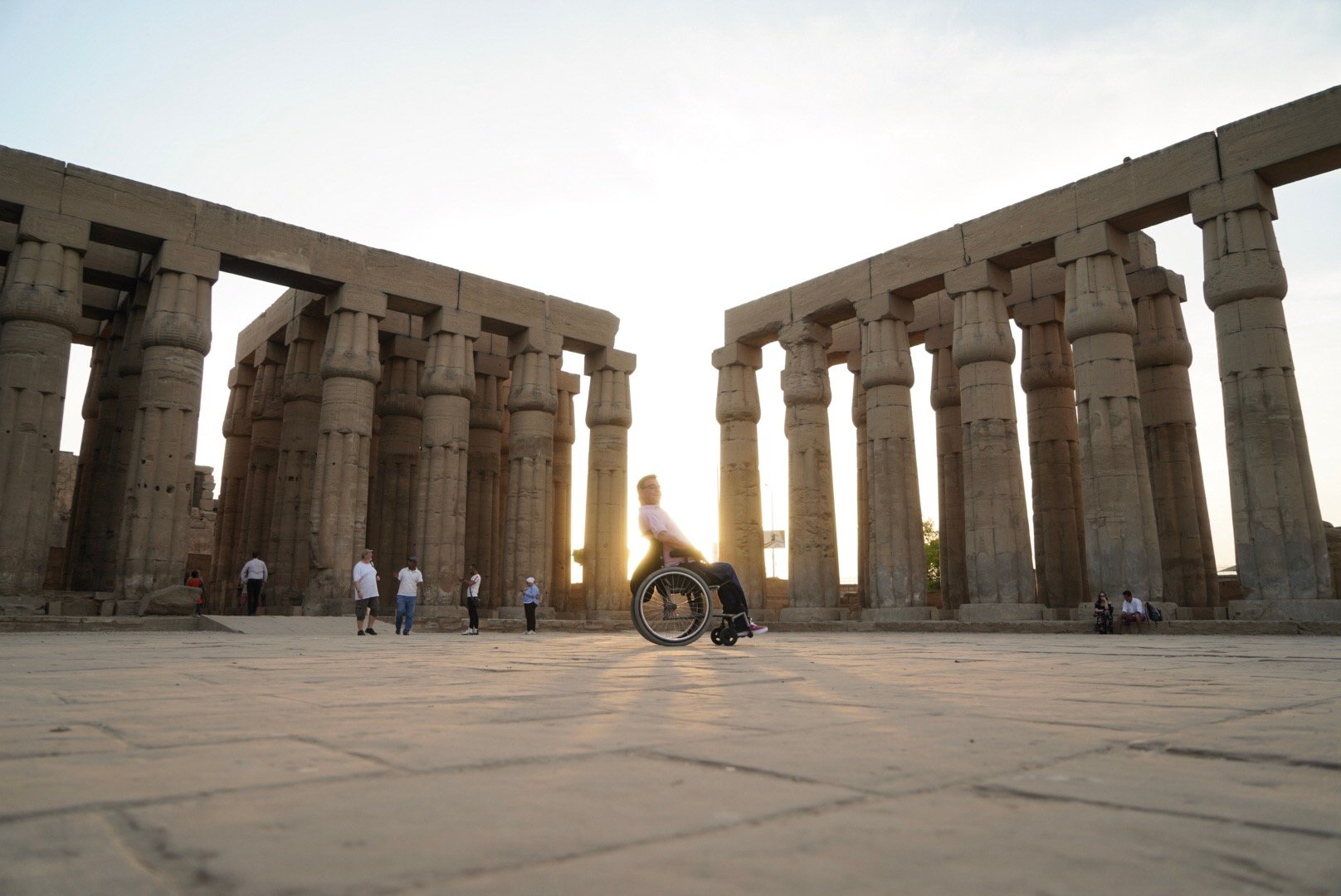
I have been to some pretty ‘untouched’ spots, like temples in Thailand, ruins in Cambodia, and the Pyramids in Egypt. I have navigated deep gutters, sandy beaches in Fiji, and those bone-rattling cobblestones in Rome. In my experience, expecting a power chair to get across those would be a bit of a dream. Yes, it puts more strain on my carer and restricts my independence, but I always have that conversation early on with my carer to explain my hopes for the trip, and they have always agreed that the manual chair is the way to go. For me, trying to take both chairs would just be impractical, so the manual chair is my constant companion.
Over the decades, my "kit" has evolved into a fine-tuned system. This is how I personally keep my gear, and myself, sorted on the road.
My TiLite manual wheelchair
I have tried plenty of wheelchairs over the years, and most manufacturers claim to have the lightest or newest thing, but I have usually found they have only lasted me three or four years before giving up the ghost. That changed in 2009 when I was getting ready for a big adventure through Vietnam and Cambodia, and a good mate suggested I try a TiLite.
When that Titanium frame arrived, I realised that this was going to be a long-term relationship. That chair lasted me thirteen years. It only let me down twice in all that time, and to be fair, I was really testing it’s limits. Because it is titanium, it absorbs the vibrations of rough ground but stays incredibly strong. It is also surprisingly light, which I have found is a massive help when checking in for flights or when my carers are pushing me or lifting it in and out of car boots.
On one trip to Greece, I actually had to do some mid-trip maintenance. I contacted the supplier back in Sydney, and they shipped spare parts directly to me in Greece. We replaced the pieces ourselves. Later on that same trip, a friendly hotel handyman let us use his workshop to help us reinforce one of the back canes. That chair is actually still in working order today, and I keep it as my backup for when I have issues with my current one.
Spare parts and pressure care
I have learned the hard way that I can’t just rely on luck when I am thousands of miles from home. My suitcase always has a dedicated section for "what-ifs".
The ROHO Cushion
I believe the ROHO cushion is the ‘bees knees’ for pressure care because of the air-cell technology. But, like anything filled with air, there is always a chance of a leak. A friend once told me to take a second cushion, advice I had never received before, until one specific trip. On that very journey, I managed to get a 1cm hole in my main cushion. Luckily, I had that spare tucked away in my suitcase. These cushions are handy because they compress right down and don't take up much space in the luggage. However, if I’m carrying air cushions, I need to know I can inflate them, so I always carry two reliable pumps that come with two pressure gauges attached, just in case I need them.
Tyres and Tubes
I never carry just one spare inner tube anymore. I recall an occasion where we went to replace a flat, and the brand-new tube got damaged while we were putting it on. Now, I always have a handful of tubes and the tools to swap them out. It is a bit of extra weight, but it is worth it to know I won't be stuck in a hotel room over a flat tyre.
Sheepskins and Mats
At home, I sleep on an air mattress, but that’s not always possible in a hotel. I have found that travelling with two sheepskins works wonders for me. I lay them on the hotel mattress for pressure care. I take two just in case one gets soiled or,as has happened, I accidentally leave one behind in a room. I also carry a sheepskin sliding mat for car transfers and short flights to keep my skin protected when I am not on my main cushion. I prefer sitting in the front seat of regular cars rather than wheelchair-accessible vehicles because I find it more comfortable, so the sliding mat gets a lot of use.
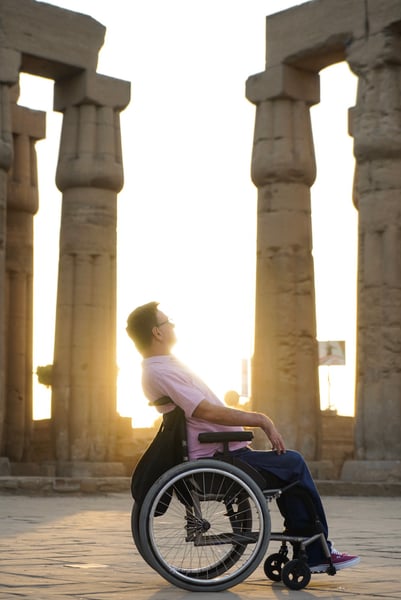
Most of the images are courtesy of Little Frames. We’re proud to support and showcase their work in capturing authentic moments
Bathroom and leisure
The equipment I take isn't just about the chair; it’s about maintaining my routine no matter where I am.
One of the mainstays of my luggage is a collapsible commode frame. It partially fits right into my suitcase, which is a big help. For the actual showering, I have found a very handy solution for those showers that are just not right. Back in the early days in Vanuatu and Fiji, I used to carry a 3-metre hose because I wasn't sure what the bathrooms would be like. Now, I have settled on a 1-metre rubber hose that can attach to a hand basin. If I can't get my commode directly under the shower, I can still wash properly in the middle of the bathroom. It’s a simple bit of gear that has saved me in many an "inaccessible" bathroom.
When it's time to relax, one of my favourite things is lying in a pool or a lagoon on a hot day. To do this, I use a heavy-duty ‘Lilo’. I always look for the old-school red and blue cotton-covered rubber ones meant for camping and canyoning because they are tough as nails. I usually take two, just in case one blows up. They are also good for giving my bum a rest if we are having a picnic or I am spending a long time outdoors on a hard surface. It keeps me included in the outdoor activities without worrying about pressure sores.
The Proactive Mindset
I have found that being proactive is the only way to travel with peace of mind. I don't wait for things to break; I assume they might and prepare accordingly. Whether it's having that spare TiLite cane or an extra inner tube, having my own "mobile workshop" means I can focus on the ruins or the beaches instead of worrying about a breakdown. I think that if I have the right tools and the right chair, there aren't many places in the world that stay off-limits for long.
Taking all these 'just in case' items means I usually end up with at least five pieces of luggage, including the commode and my carer's suitcase. That might seem a bit overwhelming to some, but at the end of the day, it is what gives me the means and the peace of mind to jump into my travelling adventures. Besides, I have found that folks at airports and hotels are always very keen to lend my carer and me a hand when it comes to shifting all those bags.
Check out Philip's video on his travels!
Disclaimer
This article reflects the personal experiences and opinions of the author. Travel experiences, accessibility, and outcomes can vary widely depending on individual needs, equipment, destinations, and service providers. Information shared is intended as general guidance only and should not be considered professional, medical, or legal advice. Always check current accessibility information and make decisions based on what works best for you.
Stay connected
Have you got a story, tip, or question of your own? We’d love to hear from you! Send it through here
Would you like more user-first tips, lived experience stories, and helpful resources sent straight to your inbox? Subscribe below. Useful information, created with and for wheelchair users.