

When people think about improving independence in a manual wheelchair, the first thought is often: “What needs to change in my environment?” Installing ramps, making doorways wider, removing lips around the house. And while those things absolutely matter, they’re only part of the picture.
The other, and often underestimated part is your manual wheelchair skillset.
The Wheelchair Skills Program (WSP) developed by Dalhousie University is built around this exact idea: that real-world independence comes from the ability to use your wheelchair effectively, safely, and confidently across a wide range of situations.
-
Skills = Practical Independence
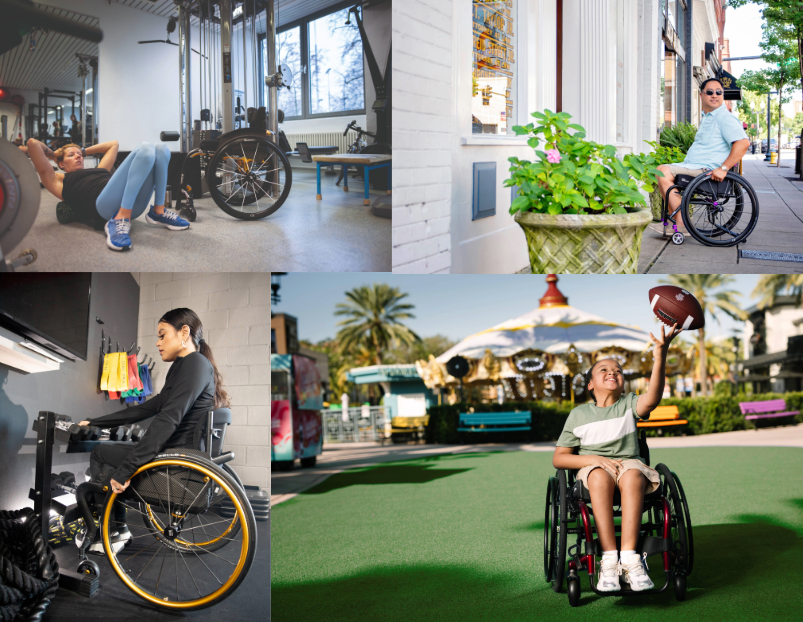
The WSP breaks wheelchair use down into a wide range of practical skills. These range from beginner level skills such as:
- Propelling efficiently on flat surfaces
- Turning and manoeuvring in tight spaces
- Performing weight shifts to manage pressure
- Navigating thresholds and opening doors
- Managing slopes, uneven ground, and curbs
- Static and dynamic wheelies for negotiating obstacles
All the way up to advanced and complex skills such as:
These aren’t “nice-to-haves” or “party tricks” but each of these skills represents the everyday challenges that determine whether you can access the world around you on your terms .Wheelchair skills aren’t one-size-fits-all. They’ll look different depending on how you move, your physical capacity, and your equipment setup; whether you’re foot propelling, using your arms or a combination of both. What’s important is that your skills align with how you move, where you want to go, and the equipment you use
Skills Can Reduce Barriers (Not Eliminate Them)
This isn’t about ignoring accessibility or pretending environments don’t matter.
It’s about recognising that developing your skills can expand what you can do within the environment you have right now.
A small step might not need a ramp if you’ve developed the skill to manage it safely.
A tight café layout becomes less limiting when you can manoeuvre with precision.
A slightly uneven path becomes manageable inconvenience instead of something to avoid altogether.
Let’s Be Honest: This Is Hard!
Learning wheelchair skills is not easy.
Developing something like a controlled wheelie, or safely managing a curb, takes time, repetition, and a lot of focused effort. It’s a process grounded in motor learning, the same principles used to learn any complex physical skill. There will be frustration, progress won’t always be linear and some skills may take longer than you expect.
But with consistent practice, those skills will build. And when they do, the payoff is significant. More options and more confidence in your day-to-day life.
Safety First, Always!
Some wheelchair skills, particularly advanced ones come with real risk. Falls and injuries are possible if they’re attempted without the right support.
That’s why this part matters just as much as the skills themselves:
- Work with a therapist or a Peer led skills program who understands wheelchair skills training and the safety protocols
- Practice with a trusted (and skilled) spotter (friend, family member, or clinician)
- Use a structured approach, like the one outlined in the WSP
- Progress step-by-step, not all at once
The WSP provides clear guidance on how to structure training, set achievable goals, and practise safely. Use it as your roadmap! Check out the link here to see some of the learning materials and resources developed by Dalhousie University.
Where to Start?
You don’t need to learn everything at once.
Start with this question: “What barriers do I face most often in my day-to-day?”
Then focus your training on the skills that will make the biggest difference to you. With time, effort, and the right support, it will be these specific skills that can help you overcome barriers that matter most to you and even open new doors… sometimes quite literally.
Not sure where to begin? These videos are a great place to start:
Stay connected
Have you got a story, tip, or question of your own? We’d love to hear from you! Send it through here
Would you like more user-first tips, lived experience stories, and helpful resources sent straight to your inbox? Join now
Useful information, created with and for wheelchair users.
Disclaimer
The content in this blog is intended to be informative and empowering, sharing general insights and experiences around life with assistive technology. It reflects the views of the author and is not a substitute for personalised medical, clinical, or professional advice.
Everyone’s needs, goals, and health circumstances are unique. If you’re considering any changes to your equipment, routines, or support, we always recommend speaking with your Occupational Therapist, healthcare team, or another qualified professional.