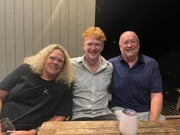


As the Convention on the Rights of Persons with Disabilities marks its twentieth anniversary, Mathew reflects on progress, persistent barriers and what must change to build a genuinely inclusive future.
The 2026 International Day of Persons with Disabilities is being observed under the theme “The CRPD at 20: Building on Progress, Advancing the Future.”
This year marks two decades since the United Nations General Assembly adopted the Convention on the Rights of Persons with Disabilities, known as the CRPD. The Convention established an international framework recognising the right of persons with disabilities to participate fully and equally in society.
It represented an important change in perspective: away from viewing persons with disabilities as recipients of charity or care and towards recognising them as people with rights, choices and an active place in society.
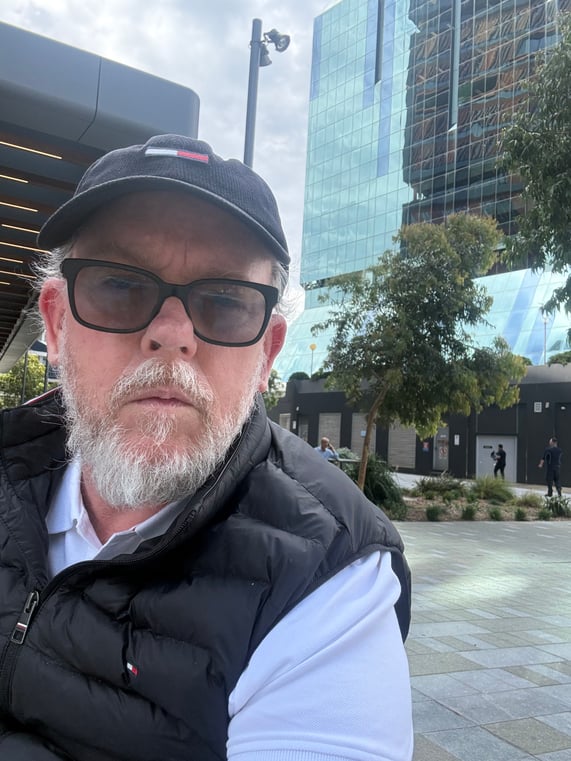
For Mathew, who lives in Bankstown and has used a wheelchair for approximately 18 years, that promise of equal participation does not always match everyday reality.
Rights must be experienced in everyday life
The CRPD recognises accessibility as essential to living independently and participating fully in society. But accessibility is not experienced through conventions, policies or public statements. It is experienced through footpaths, buildings, workplaces, transport systems and everyday interactions.
In Bankstown, Mathew describes navigating damaged footpaths, large potholes, poorly maintained accessible facilities and drivers continuing through red lights while he is already crossing the road.
Some local destinations require wheelchair users to take complicated alternative routes. To access one cinema, for example, Mathew says he must enter through the civic centre, use a lift, cross a car park and then use another lift. If the civic centre lift is not working, he may have to travel down vehicle ramps, putting his safety at risk.
He also describes accessible bathrooms that are damaged, unavailable or regularly used by people who do not require them.
Individually, these may appear to be separate problems. Together, they determine whether Mathew can move through his community safely, independently and with dignity.
He says poorly maintained routes have contributed to accidents and that, when he has reported problems, he has often felt ignored.
Twenty years after the CRPD was adopted, Mathew’s experience raises an important question: How much progress has truly been made if disabled people must still repeatedly identify, report and personally navigate barriers that should have been prevented?
When access becomes the individual’s responsibility
A disruption to Mathew’s journey to work illustrates the gap between the promise of inclusion and the experience of it.
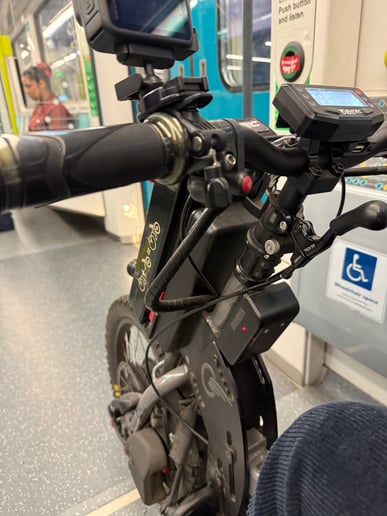
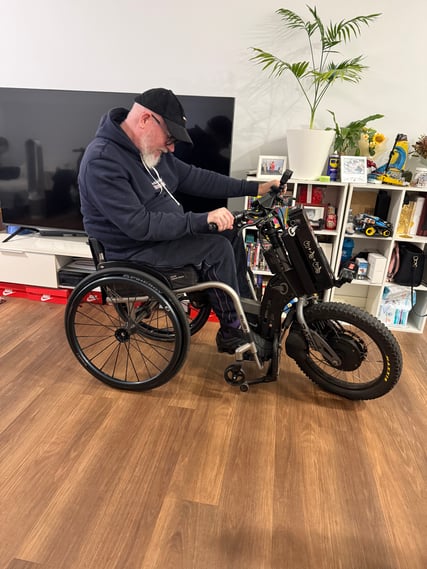
During changes to the Bankstown train line, buses temporarily replaced trains on part of his route. According to Mathew, he was unable to use the replacement buses because his wheelchair and power-assist device were classified as a bicycle.
He says he was told that making alternative arrangements to reach work was his responsibility. Without an accessible replacement service, one option would have required him to wheel from Bankstown to another station through rain, cold weather and sections of the route he considered unsafe.
When Mathew raised the issue, he felt its seriousness was not acknowledged. In one response, he recalls being told that no one had instructed him to wheel to another station.
For other passengers, a replacement service was available. Mathew was expected to solve the disruption himself.
“Disabled people are not considered when using public transport,” he says. “The onus is always placed on us.”
The experience demonstrates the difference between providing the same nominal service to everyone and ensuring everyone has an equitable way to participate.
Inclusion must be more than words
Mathew sees a similar gap between stated commitments and lived reality in employment.
He believes disability inclusion is frequently present in policies, strategies and job advertisements, but is not always reflected in accessible workplaces, recruitment decisions or organisational culture.
Mathew recalls applying for a senior position after previously acting in more senior roles. During the interview, he was asked what he would do when entering a tenant’s property to conduct a client service visit.
He answered according to the relevant procedure. However, Mathew says his response was mocked and members of the interview panel laughed.
The experience left him questioning the value of disability inclusion commitments when a disabled employee does not feel respected or taken seriously.
“Disability inclusion is something the department talks about, but does not act on,” he says.
The CRPD affirms the right of persons with disabilities to work on an equal basis with others. Mathew believes organisations must look beyond the inclusion language in their policies and consider whether disabled employees experience equitable opportunities, accessible environments and respect in practice.
From accommodation to equal participation
Mathew’s experiences suggest that accessibility is still frequently treated as an individual request or special accommodation rather than a normal part of good design.
When an accessible route is not maintained, a replacement transport service cannot carry a wheelchair user or a workplace excludes someone while publicly promoting inclusion, the disabled person is left to absorb the consequences.
They must report the problem, explain why it matters, find another route or challenge a decision, with no guarantee they will be heard.
For Mathew, genuine progress would shift that responsibility.
Accessibility would be considered before a footpath was repaired, a transport service commissioned, an office opened or a recruitment process designed. Disabled people would be involved early in decisions about the environments and services they use.
They would not have to continually prove that a barrier exists before someone agrees to address it.
“Listen to us”
When asked which assumptions about wheelchair users he most wants people to reconsider, Mathew’s answer is direct:
“We are human. Do not speak down to us. Don’t ignore us when we raise something. Listen. Don’t pretend to care in the hope that we disappear.”
His words capture an important requirement for advancing disability rights: disabled people must not only be visible but also heard.
Wheelchair users bring direct knowledge of where environments, policies and services fail. Listening to that knowledge can prevent exclusion, improve safety and create better experiences for the wider community.
But consultation only creates change when people respond to what they hear. Moving forward requires more than inviting disabled people into a conversation. Their experience must influence decisions.
Building on progress and advancing the future
For Mathew, progress cannot be measured only by improvements in wheelchair technology.
It must also be measured by whether people can travel to work, move safely through their neighbourhoods, enter public buildings and pursue career opportunities without encountering preventable barriers.
If someone became a wheelchair user today, Mathew would want them to receive greater support and experience genuine inclusion from the beginning. He also wants disability rights to receive greater recognition, backed by meaningful action throughout the year.
The twentieth anniversary of the CRPD is an opportunity to recognise what the Convention achieved. It is also a time to look honestly at the distance between the rights it established and the everyday experiences of people such as Mathew.
The future he wants is not one in which wheelchair users become better at navigating inaccessible systems. It is one in which those systems are designed to include them from the beginning.
His message this International Day of Persons with Disabilities is only two words, but it captures both the purpose of the CRPD and the work that remains:
“We matter.”
This story is shared as part of the beyond community, which brings together people with different experiences, interests and ways of participating.
Everyone’s story is different. If you would like to share yours, or be part of the beyond community, we’d love to hear from you - fill in our form here.